Are You “All In” For Victory?

I am not much of a poker player. In fact, I have not really played since college. At the same time, I do occasionally like to watch the World Series of Poker. I always get excited when one of the players senses victory and calls out, “All in!”

victory

This is the second post in a series of posts on victory in this life. In my last post, I asked you to define “victory.” I also gave you the definition Jesus gave us as the standard we all should follow. If you did not read that post, you really need to take a minute or two to go do that now. It is the foundation for the rest of this series.

Going “All In”

For those not familiar with poker, going “all in” means you are putting ALL of your chips (money) into the pot and are fully committing to that particular hand you were dealt. You are holding nothing back!

If you win the hand, you win the pot and are able to continue. If not, you are completely out of the game as you have nothing left with which to bet.

Of course, poker is not the only place you will hear “all in” being used. You are not worth your salt as a coach or leader of any team if you have never asked your team to go “all in” at one point or another. If you have ever played any sports, you have most certainly been asked to go “all in.”

What Does It Mean?

So what exactly does “all in” mean?

When a coach or leader asks us to go “all in,” it means they want us to give everything we have (energy, focus, effort, etc.) to whatever strategy he has chosen to employ at the time. Whether it is the last play of a game or the launch of a new product, we are being asked to give everything we have to achieve success as it has been defined for us.

“All In” With God

Folks, the same is true in our life as a whole. We learned in the last post that Jesus defined victory in this life by referring to our relationship with God. In His definition, we are to go “all in” in our love for God and our neighbor.

He did not just ask us to love God, but to love Him with ALL of our heart, mind, and soul. He did not ask for a portion of our lives, but for ALL of our lives. For us to achieve victory in this life, we must submit our all to Him!

This is critical for all of us to accept AND to put into practice!

Giving Up Control

Back to the poker player, I want to be clear about why I get so excited when I hear them call out, “All in!” You see, at this point, there is nothing more they can do. The game, as far as they can control it, is over for them. The victory, or defeat, is out of their hands.

Again, this same idea applies to our relationship with God. He is not interested having us partially rely on Him. No, He wants our whole dependence to rest on Him and His provision. God wants to be our sole (and soul!) provider.

All In For Victory

He wants us to go “all in” in our relationship with Him. He wants us to go “all in” with Him as we seek victory in this life. He is faithful to make good on every one of His promises and to have our best interests at heart. Don’t forget, He DID create us. I think He knows what fulfills us.

One final point about the poker player. You want to know the funny thing about the moment in between them calling out, “All in” and them finding out whether they won or not? Watch their body language.

More often than not, you will see the pressure disappear from their body. They actually show huge relief. Their shoulders will sag and they will exhale in a way that says they have released control and can only now wait on the results.

If you will go “all in” with God, you will quickly realize that He can handle it. There is nothing more for you to worry about. The results are no longer up to you!

Once you submit, you can relax and enjoy the ride!

Are you already “all in” with God?

What victory do you think He wants for you?

What control do you need to release to Him?

How Do You Define Victory?

This is the first in a series of posts about victory in our lives as Christian business owners and leaders. I am really excited about this series because I think this is a critical issue for all of us, though most of us have not thought much about it.

victory

Desire For Victory Is Okay

Sure, we want to win. Most of us have participated in some form of team sports during our lives at one point or another. I am assuming that all of us have wanted to taste victory to some degree. To some, you may not want to win at all costs, but certainly would prefer winning to losing!

Some of us REALLY want to see victory in EVERYTHING! As long as we do not let that desire for victory override our desire to please God, there is nothing at all wrong with it. In fact, I think God places that desire for victory inside of each of us.

Most Stop Here

If you are like most people, this is about as far as your thoughts have gone. You have probably not thought a lot about what victory actually looks like in your life as a whole. If you have, congratulations! You are probably the exception.

For the vast majority, if asked what victory in life means, they would respond with things that the world considers important. Even if we exclude the obviously “non-Christian” answers (money, toys, fame, etc.), we would still likely hear things like the following:

  • Good education for my children
  • Comfortable retirement for me and my spouse
  • Successful career with reputable company
  • Solid reputation with everyone, no enemies
  • Large attendance at my funeral

Are any of these answers BAD?

I think it depends.

Victory Goals or Results?

I think it depends on whether these were your goals or just the results.

Think about that for a minute. If you sought these examples as your ultimate goals, then that means you placed them above any other priorities. Assuming you are a believer, then it means you placed these goals ahead of your relationship with God. That is not good.

If, on the other hand, your ultimate goals related to your relationship with God and these examples came to you as byproducts, then I do not see a problem with them at all. If that is what God blessed you with at the end of a life submitted to Him, then I would say, “Awesome!”

Ultimate Question

I say all of this to come to one central, and very important question. In fact, I would rank it as one of the most important questions any of us can ask ourselves. This is a question few ask, but all answer in one way or another. Whether you stop and ask this question or not, you will end up answering it. Here it is…

How do you define victory in this life?

It looks like a fairly straightforward and simple question, doesn’t it?

Simple Question, Rarely Asked

It may be a simple question, but it is not one correctly answered by most people. Instead, most people never ask the question at all. They simply accept the definition given to them by the world around them.

Most people allow everyone else to define victory for them. Then they spend the rest of their lives chasing that definition. I think this is sad.

Simple Answer

I think it is sad because there is a simple answer to this question. I think it is sad because the simple answer to defining victory is found in the Bible and chasing this definition brings everyone the fulfillment they so desperately crave.

For the question itself, and the answer, we only need to look at Matthew 22:34-40. Jesus is asked about the greatest commandment of all. Jesus is essentially asked how He defines victory for all of us. Here is His answer…

Jesus replied: “‘Love the Lord your God with all your heart and with all your soul and with all your mind.’ This is the first and greatest commandment. And the second is like it: ‘Love your neighbor as yourself.’ All the Law and the Prophets hang on these two commandments.”

Simple and Straightforward

There it is. It is very simple and straightforward. We are to love God, our Creator, with all of our heart, mind, and soul and we are to love our neighbor as ourselves. That is God’s definition of victory for all of us. It does not get any simpler than that.

As a result of this Scripture, there really is no longer a need for us to struggle in defining victory. We have it right there in black and white. All we need to do is chase that definition.

Of course, it may be a simple definition, but it is not that easy, right?

More Questions

Once we accept this definition as the truth, many more questions begin to come to mind.

    How exactly does God want me to show Him this love through my life?

    How do my individual skills and talents play into this?

    How much of this victory depends on me and my efforts?

    What happens when I mess up and lose?

I understand. I have the same kinds of questions at times…okay, all of the time! That is not a problem. God likes these questions! When you are asking these questions, it means you are thinking about it! That is exactly what He wants from us. It is so much better than mindlessly accepting the world’s definition of victory.

Over the next several posts, we will be talking a lot more about victory in this life and our roles and responsibilities in seeking it. Stay tuned!

Are you one of the few that has already defined victory in your life?

On what Scripture is your definition based?

If you’ve never thought about it, when will you start?

Are You Making Yourself Useful?

useful

Have you ever heard a quote that you just could not get out of your head? It is kind of like that annoying 80’s song that gets stuck in your brain and continues to play over and over, without letting up. I know you know what I am talking about! Well, I heard a quote the other day that continues to echo in my mind. The good thing is that this quote about being useful fits with what I believe is my life purpose!


The Quote

I was listening to Jim Collins speak at the Catalyst conference in Atlanta. He was talking about an interview he had with Peter Drucker. Towards the end of the interview, Peter asked Jim for permission to offer him some advice. Jim, of course, was quick to agree! Who would refuse to take advice from Peter Drucker?!?

Drucker went on to say something to this effect (imagine his Austrian accent here)…

“Jim, you keep talking and thinking about survival…(pause)…You will probably survive. You also keep dwelling on success…(pause)…you will probably be successful. (longer pause)…Why don’t you go make yourself useful?

Collins said he had no response. He said that quote has stuck with him since then.

My Response

Well, I just have to tell you that it has stuck with me as well. As I continue to hear it rattle around in my head, I wonder if I am truly being “useful.” Then I start to question what “useful” really means, in light of my faith, my (stewardship of His) business and an eternal perspective.

So I did what anyone would do this day and age…I googled it! Here is the Dictionary.com definition of useful:

usefulLooking at the first definition, I keyed in on the words serving some purpose. Am I serving some purpose? What purpose should I be serving?

Serving Some Purpose

It is clear to me that Jesus has already told us what our purpose should be. When asked about the greatest commandment, He answered with two…”Love the Lord your God with all of your heart, mind, soul, and strength” and “love your neighbor as yourself.” His final instructions to us before He ascended was to “go and make disciples of all nations….” Now it is simply up to us to determine how He has gifted each of us to carry out, to serve, this purpose.

Of Practical Use

As for the second definition listed above, “of practical use,” it is similar, but I also see a little different perspective. I see myself as the tool in God’s hands – carrying out whatever practical work or task He has in mind for me. This requires my vision to be submitted to His. It requires me to be flexible, ready to change direction according to His will. In this definition, I see fewer grandiose projects and more washing of feet. I see God getting glory from the most menial of my tasks.

Useful?

So, once I break it down…what is my answer? Am I making myself useful?

For me, I believe God has placed me in a position at the head of a family business for the purpose of loving and serving Him and others. I am to do this as a business leader, but I am also to serve this purpose as a godly husband, father, church member, neighbor and friend. Each of these roles requires a different approach and I may need to employ various methods or skills, depending on the role. Regardless, each of these roles should fulfill the core purpose Jesus laid out for me.

So, for now I will say I am definitely a work in process. I am learning and growing. I am striving to be and do those things that will result in hearing, “Well done, good and faithful servant.” I am certainly not there yet. I don’t suppose I will ever actually be there. At the same time, that is what the “making” is all about!

What about you? Are you too concerned with survival or success?

Are you making yourself useful?

What do you need to change to improve?

Originally posted 11/7/11

Great Leadership Advice From My Dad

My Dad’s advice is still coming in handy after all these years! You likely remember similar words of advice in your life, whether it was from your father, a teacher, or even an Andy Griffith show! Even after many years, some advice continues to apply in our everyday lives.

advice

Dad’s Advice

I still remember it like it was yesterday. I was heading out on a date in high school and Dad wanted to give me some final advice. His wise words still ring in my head some 25 years later.

Son, make your decision about what you will and won’t do right now. Whether is it drugs, alcohol, or sex, you cannot wait until the heat of the moment to decide. It will then be too late.

Of course, then I was too cool to let him know that I was listening! Fortunately, I was listening and made (mostly) wise decisions during those years. I knew he was wise then, but I had no idea I would still be following (and giving!) that advice these many years later!

Good Advice?

What makes this advice so good?

Well, in my mind it is ALL about timing. If we go through life waiting to make decisions until we face certain circumstances, then, as my Dad said, it will be too late. The emotions of the circumstances will override our logic and cause us to lean toward immediate gratification rather than deferred gratification. Making these decisions ahead of time allows us to think more clearly and to consider all consequences.

Example Situations

I think the picture was fairly clear in the high school example. Let me give you some examples of situations we may face as adult Christian business owners and leaders to illustrate what I am talking about.

[box]

  • If you have not decided ahead of time how much money you will give or how you will give it, then what do you think you will do when the profits start rolling in or your income increases?
  • If you have not decided what you will do in advance, what do you think you will do if shown a “grey area” loop hole by your financial planner that he describes as “commonly used” by others?
  • If you have not made up your mind beforehand, what will your response be when offered a chance to go alone to a business lunch with a very attractive rep from one of your vendors?
  • If you have never planned your response to an opportunity to tell a little white lie to cover up a mistake you made, what do you think you will say?

[/box]

As you read through these examples, one or two of them probably stood out to you. You may have already faced these circumstances. If so, whether you made the right choice or not, you know what I am talking about. You also know that the likelihood of a good decision without advance planning is very low.

Applying The Advice

So how do you make the right decisions in advance?

You may be thinking that you cannot possibly be expected to anticipate EVERY potential circumstance when you would have to make such decisions. If so, you are right. I do not expect you to do that at all. In fact, that would be ridiculous.

No, I have a few simple thoughts that should put you on the right track. Take a look at these and see what you think.

1. Ask God to search your heart and show you where you are vulnerable. (Psalm 139:23-24)

    It is very likely that you are stronger in some areas of your walk and weaker in others. If you will ask God to point these weaker areas out to you, He will be faithful to do so (Psalm 145:18-19). It is these areas where you need to focus your attention.

    You do not need to worry about EVERY possible scenario in these areas. Take the most likely decisions you could face in each area and start with those.

2. Take these weaker areas and plan out your responses. (Proverbs 12:5)

    Take these weaker areas that God reveals to you and think about potential pitfalls. What kinds of decisions could you face that might throw you off your game? What decisions would you want to make in each area if you could write the script? Now begin doing exactly that!

    Make the decisions in these areas NOW so that you do not have to try to think about it when it is too late and you are under pressure (Proverbs 1:10-19)!

3. Use Scripture as the strong foundation for these decisions. (Psalm 119:11)

    If your vulnerable decision is about giving more money even when the temptation is there to spend more on yourself, try 1 Timothy 6:17-19 or Luke 6:38. If your weakness is maintaining your integrity when preparing your taxes, then use Psalm 119:36 or Proverbs 11:3.

    You get the idea. The point is to use an easy-to-remember verse from which to rally when put in a tough spot. Memorize the appropriate Scripture and call on it when challenged.

Do you remember similar advice from years back?

How does this advice apply to your work today?

What advice would you give to someone else today?

How Should A Christian Business Respond To Legal Issues?

[box]Today’s post is a guest post by Dave Moser, who blogs at Armchair-Theology.net. Dave brings up a great question that more and more Christian business owners may face in the not-so-distant future. Read about the shocking story Dave discusses and think about how you might respond if your Christian business faced these legal issues.[/box]

legal issues

Legal Issues Facing Christian Business

In the realm of religious political discourse in the US, contraceptive/abortifacient funding and gay marriage reign supreme. These push other issues to the side – legal issues that have a huge impact on Christians in the workforce.

What if the government forced you to vindicate sin?

As a photographer, strongly considering photography as a source of income in seminary and if needed as a bi-vocational pastor, I couldn’t help but be touched by this story:

Elane Photography… received an email from a woman in a same-sex relationship inquiring about prices for shooting her and her partner’s “commitment ceremony” in Taos. The photographer knew that she could not in good conscience use her artistic skills to photograph a ceremony that communicated support for redefining marriage. Although the same-sex couple found another photographer for their ceremony, one of the partners filed a discrimination complaint with the state, subjecting the owners to a trial before the Human Rights Commission.

The owners explained that they tried to operate their business according to their higher principles, including those on marriage. The commission rejected their First Amendment defenses, found the company guilty, and ordered it to pay $6,600 in attorneys’ fees. The case is now on appeal and awaiting a decision by the New Mexico Court of Appeals.
Santa Fe New Mexican (emphasis added)

The Human Rights Commission requires Christians in business to sponsor sin.

Not Just Homosexuality

This isn’t a rant against homosexuality. There are a myriad of business scenarios this type of ruling could impact:

  • The construction company which refuses to build an abortion clinic.
  • The cleaning service which refuses to clean a strip club.
  • The newspaper which refuses to run advertisements for a casino.
  • The doctor who refuses to conduct abortions.

If the government prevents Christians from recusing themselves from business deals based on moral grounds, we could find ourselves required to perform actions we abhor.

How Can Christians Respond?

Christians have many options in responding to this trend. I’ve listed some here along with some of the difficulties I see them presenting. I’m not saying that these are the only options or the best options. Neither are the considerations complete. This isn’t legal advice. It’s a starting point for thought and discussion.

1. Civil Disobedience

The first option is to knowingly disobey such orders. Knowingly abstaining from sinful actions and bravely submitting to the consequences is a powerful witness.

Considerations:

    This is dissimilar from the race-focused civil rights movement of the mid-20th century on one major factor: the momentum of cultural perception. God created all humans in His image so race-based discrimination is an affront to the very character of God. The civil-rights movement of the 1960’s was a movement towards biblical truth.

    However, abortion, gay marriage and similar issues are anti-biblical. Western culture is moving away from, not towards, a biblical truth. Culture will be against us, not for us. We will not be cheered for this, we will be jeered for this. Go down this path with eyes wide open.

2. Political Change

The western societies characterized by policies like this (or on their way to it) are also characterized by some form of citizen government. As such, citizens have the ability to affect change in their government’s policies.

This is exactly what the Alliance Defense Fund is doing in the case of Elane Photography. ADF is going to the courts to defend Elane Photography with the intention of establishing court rulings favorable to conscience-driven business practices.

Other avenues include:

  • Ballot measures to make concience-driven business practices legal
  • Nominating, promoting and voting for politicians friendly to the cause

Considerations:

    Much like civil disobedience, these measures are going against the momentum of the present culture. You might lose business, reduce social standing, receive threats or even be attacked for your stance.

3. Change Your Product

The business of photography is driven by specialization. No one is simply a “professional photographer.” There are:

  • Maternity photographers
  • Advertising photographers
  • Landscape photographers
  • Fashion photographers
  • Photojournalists
  • Infant photographers
  • Architectural photographers
  • Sports photographers
  • Wildlife photographers
  • …and a whole host of other specializations

No one sues a landscape photographer for not shooting their wedding.

Would Elane Photography be in this trouble if the service they provided was specifically “photographic documentation of Christian weddings”? Christian weddings have different customs, symbols and points of emphasis than civil ceremonies, marriages for other religions and other family events and is therefore a legitimate specialization. If that is the specialized service you provide, chances are much lower that you will be sued for not providing services in conflict with your morals.

Considerations:

    1. Offering more specific services will limit your potential pool of clients. This could have obvious impacts on revenue.

    2. The laws of your jurisdiction may not provide legal shelter with a simple rebranding of services. Consult a lawyer before rebranding your services for legal protection.

4. Use The Opportunity For the Gospel

Perhaps Elane Photography could have used this as an opportunity to advance the gospel. If the final photographs delivered included Bible verses that proclaimed the gospel or posed challenges to sinners, might God have been served?

This also gives a Christian to hold a relationship with the non-Christian instead of avoiding them. Not only your product, but your words and actions are a witness to the unbeliever.

Bake the gospel into your product and your dealings with the world.

Considerations:

    1. This method involves actually conducting the practice with which you disagree. It is, without question, a grey area. It risks directly sinning or putting a stamp of approval on the sin.

    2. You must be completely transparent about what service you are going to provide. If the photo book you deliver is going to be saturated with Scripture, this can’t be a surprise when the customer takes delivery. Make sure your contract explains that the photos will be accompanied by relevant Bible verses.

    3. Your work represents Christian business to the world in a special way. Your product must display excellence or it will tarnish the name of Christ with the labels shoddy, lazy, unrefined and substandard.

    Jesus is a treasure. Represent him that way.

What Next?

How would you respond if you were in Elane Photography’s place?

What other considerations are there for the options I listed above?

Are You Celebrating Freedoms Or Taking Them For Granted?

I was going to take the day off from posting to celebrate with my family, but I could not resist giving you a couple of thoughts about the freedoms we are celebrating here in the US.

freedom

Thank God For The Sacrifice

First, we need to thank God for the sacrifice of the men and women over the years that have served, fought, and died for our freedoms. We have so many freedoms that we take for granted every day. The majority of the world yearns for the freedoms we have. God has certainly blessed our nation.

Taking Freedoms For Granted?

This leads to my second thought. Assume for a minute that you live where you have none of these freedoms. Assume you have never had these freedoms, but you have been told all about them. You pray and pray for these freedoms, but nothing happens.

Now imagine that one day, you are given the freedoms you sought for so long. You are given the freedom to worship whenever and wherever you want. You are given the freedom to talk about your faith with others…at school, work, the grocery store, etc. You are no longer limited in how you exercise your faith in God. You are free!

What do you think you would do? Would you exercise this new-found freedom or would you remain quiet? Would you begin openly talking about your faith in the workplace or would you continue with sealed lips? Would you publicly acknowledge God and all He has done for you or would you keep all of that to yourself?

What Is Holding You Back?

Think about it. If you live in the US, you HAVE these freedoms right now. God has placed you in a nation that allows you (for now) to worship when and where you please. You can openly share your faith and you do not have to keep quiet about God’s role in your life!

So the question is this…are you exercising these freedoms or are you taking them for granted and virtually ignoring them?

Don’t rush on – stop and think about the answer to that question.

Our Responsibility

My final thought – this blog is currently read in 138 countries worldwide! In fact, one out of every four readers of this blog are from outside of the US. I do not know how many of those readers are limited in their freedoms either by law or by persecution or both. I do know that many of them would love to have the freedoms we take so lightly!

That being the case, I truly believe it is our responsibility to stop being so lazy or scared (or both) and start exercising these freedoms! Step up and take your faith into the workplace. Talk with someone about your faith and what God has done in your life. Move out of your comfort zone and trust God!

You will be glad you did and you will be stronger for it.

Employee decisions: Rigorous or Ruthless?

Employee Decisions

As Christian business owners and leaders, we are usually very involved in employee decisions on a consistent basis. In fact, that part of our job can absorb a majority of our time. Our ability to handle these employee decisions well can also be one of the biggest influences on the success of our company, as well as the ministry we desire.

employee decisions

Assuming this is true, then it is clear that we must devote time to learning how to best handle these employee decisions. While we all agree that issues concerning people often account for the majority of the time and energy we spend in our jobs, many Christian business owners fail to spend much time thinking about their approach to this important subject.

Ruthless vs. Rigorous

As I have said before, I love to hear great quotes and can often have a hard time getting them out of my head. Last fall at Catalyst, Jim Collins had several meaningful quotes over the course of his presentation. Anyone who has read his books or heard him speak can likely attest to his ability to do this.

One of Collins’ quotes actually applies to employee decisions and can be supported with Scripture. Here it is…

There is a big difference between being rigorous and being ruthless in making and carrying out people decisions.

First, let’s look at the definitions of the two words.

    Rigorous: extremely thorough, exhaustive or accurate

    Ruthless: having or showing no pity or compassion for others

What Does Scripture Say?

While there are likely some business schools that teach the necessity of being ruthless, I think it is clear from the definition above that this is not a behavior that matches well with a Christian business – especially when applied to employee decisions. Just in case you are not certain, let’s look at some Scripture to back up that assertion.

Read Matthew 18:21-35. This quote captures the essence of the parable:

Then, after he had summoned him, his master said to him, “You wicked slave! I forgave you all that debt because you begged me. Shouldn’t you also have had mercy on your fellow slave, as I had mercy on you?” And his master got angry and handed him over to the jailers to be tortured until he could pay everything that was owed.

On the other hand, I think we can make a great argument for being rigorous. Let’s take a look at some Scripture that can give us some clarity here.

The plans of the diligent certainly lead to profit, but anyone who is reckless certainly becomes poor.Proverbs 21:5

Finalize plans with counsel, and wage war with sound guidance.
Proverbs 20:18

Differing weights and varying measures – both are detestable to the Lord.
Proverbs 20:10

So what exactly do these two ideas look like in action?

The Ruthless Leader

A ruthless manager or leader can face tough employee decisions just like anyone else, but the way they may approach these decisions is what sets them apart. A ruthless leader looks only to the bottom line and sees nothing else. Nothing gets in his way.

If someone makes a mistake, there is no second chance with the ruthless leader. If someone is not performing to standard, he cuts them from the team without mercy. If an employee needs time off for emergency family issues, this ruthless leader refuses the request. When goals are not met, heads roll.

The Rigorous Manager

On the other hand, the rigorous manager is different. Though she may also face difficult employee decisions, her approach is easily recognized to be different. Her view of the circumstances is not limited to the bottom line, but includes other factors.

A rigorous manager sees that an employee’s mistake may indicate poor working conditions or fatigue due to unusually long hours. She recognizes that substandard performance may show the need for more thorough training or upgraded tools. She is willing to consider a family emergency as a legitimate exception to the rule. She also looks further than the simple missed goals to determine if she has the right people in place.

Don’t misunderstand. The rigorous manager is anything but a pushover! She still sets clear expectations and holds her people accountable to those standards. She expects her people to stretch themselves to meet their targets. She does not tolerate patterns of variance from the standards. This manager can cut someone from the team just as quickly as the ruthless one, but she requires more information in order to make that decision.

Bible Calls For Excellence

Nowhere does the Bible tell us to be weak and spineless in our employee decisions. Instead, we are called to excellence and should not settle for less. The excuse that we should not push as hard for excellence because we are a Christian company is absolutely ridiculous!

However, pushing for excellence does not require ruthless behavior. It does require rigorous behavior.

We are called to serve Jesus. He is the King of kings and is not satisfied with our second best. We need to maintain our eternal perspective and do everything in our power to represent Him with our best!

Do you see any ruthless behavior in your employee decisions?

What would your employees say?

What steps can you take to become more rigorous?

Obedience From A Weak Position!

If you have been in business long, you have likely found yourself in a weak position from time to time. Maybe key personnel left for other opportunities or a new competitor came onto the scene. Whatever the case, you knew your organization was vulnerable. What if God asked you to do something right then that could potentially wreck your fragile situation? Would obedience be easy for you?

obedience

Fragile Situation

Not too long ago, I had a key, long-term member of our company’s executive leadership team come to me and resign. His reasons were valid and I supported his decision though I did not want him to leave.

While there could have been worse times for this to happen, it was certain to cause massive change within the organization. I was seriously concerned about the ripple effect it would have on others in the company. I knew I had to tread lightly through the transition to minimize collateral damage.

A Choice To Make

Unfortunately, within days of this news I had to face another, more significant issue which violated one of our core values. This issue, if addressed, had the potential to do tremendous damage to the entire organization – especially in its weakened position! If ignored, there was a good possibility that nothing more would come of it – at least in the near term.

I prayed about the decision. I sought godly counsel. I wrestled with it from every angle. God’s answer became clear.

The problem was that certain circumstances muddied the picture. Whenever I looked at all that was involved in this picture, I got confused. It was easy to rationalize actually sweeping the whole thing under the rug without many people even knowing it ever happened. That was certainly the easiest thing to do.

Obedience?

I had the choice between obedience and ignoring the problem altogether.

Based on the feedback I received from godly counsel, the answer was simple. I must address the issue and face it head on. I had sought godly advice and received it. I had prayed about it. The only step remaining was obedience.

Similar Circumstances For Joshua

While the circumstances are not exactly the same, take a look at Joshua 5. The Israelites have just entered the land God had promised them. Unfortunately, it was still enemy territory. They were just miles from Jericho and everyone in that town knew they were coming to attack.

It was at this point that God told Joshua to have ALL the men circumcised! If Joshua followed God’s direction, his army would be incapacitated and completely vulnerable to attack (see Genesis 34). This condition would last for several days. How could he even consider doing this?

Just like me, Joshua found himself in an extremely vulnerable position. God gave him clear instructions. He had the choice between obedience and rebellion.

Choosing Obedience

Joshua chose obedience. God honored that choice.

In my situation, I chose obedience as well.

I truly hated the decision I had to make, but I hated the alternative of ignoring God even more.

God Is Faithful

Now that I am on the other side of the decision, I promise you that God is faithful when we choose obedience. None of the fears I had ever materialized. In fact, I found out my team is even stronger than I imagined.

What I really found out (again) is that God honors our faith in Him when we choose obedience. I cannot guarantee I will always choose the right path, but I know I will remember this particular situation for years to come. I encourage you to do the same and see how faithful our God truly is.

I recently read the following quote in Wiersbe’s study on the book of Joshua, called Be Strong.

It has been well said that faith is not believing in spite of evidence but obeying in spite of consequence.

How do you see this quote applying to your situation?

What does it say to you?

Where do you need to choose obedience despite the consequences?

Where Is Your Dependence?

As I continue to deal with storms at work, I keep going back to the Bible for guidance. What is funny is how certain verses or passages pop up in unusual places to give me the encouragement I need. Just a few minutes ago, as I was scrolling through my notes for future posts, I came across the some verses (Psalm 33:13-22) that remind me where my dependence should be.

dependence

For context, let’s look at verses 13-15 first.

13 The Lord looks down from heaven;
He observes everyone.
14 He gazes on all the inhabitants of the earth
from His dwelling place.
15 He alone shapes their hearts;
He considers all their works.

Here The Lord is looking down from heaven and it is clear He is complete and total control. He is observing us and considering our works.

Then come the key verses (16-19) for us…

16 A king is not saved by a large army;
a warrior will not be delivered by great strength.
17 The horse is a false hope for safety;
it provides no escape by its great power.
18 Now the eye of the LORD is on those who fear Him—
those who depend on His faithful love
19 to deliver them from death
and to keep them alive in famine.

Let’s break that down a little so we do not miss a single morsel of value from it!

1. A king is not saved by a large army.

    There are numerous accounts throughout Scripture and other historical accounts of kings being soundly defeated despite having the advantage of a larger army.

    The lesson here is that we cannot depend on the apparent strength of our company to save us in tough times (or good ones!). If we place our dependence on the strength of our company, we risk failure.

2. A warrior will not be delivered by great strength.

    Just like above, too often the strong warrior has gone down despite appearing invincible. Just consider at Goliath. God is clearly telling us here that we are not to rely on our own strength to win the day.

    We may be brilliant in business or in our specific field, but we are not God. There are too many factors that are out of our control. We should not place our dependence on our own strength.

3. The horse is a false hope for safety.

    The horse was a great advantage in battle for centuries. If you were on a horse, it was much less likely that you would be killed. Unfortunately, even this advantage is not enough to guarantee safety.

    What is your horse? Do you have a can’t-miss product or service that you feel can carry the day and keep you out of financial trouble for years to come? Maybe your horse is a portfolio of “solid” real estate investments from 5-10 years ago? If so, I am sorry, but I think you get the message. Do not place your dependence there!

4. (The horse) provides no escape by its great power.

    Though we addressed the horse above, this line actually takes the advice a step further. Not only does the horse not provide safety, now we are told it provides NO escape.

    This is kind of like an exclamation point on the previous line. Just in case we did not get a clear enough picture in the first line, the second line comes along to blow away all the smoke. Obviously, our “horse” is not where we want our dependence!

Rest of the Picture

So, what is the rest of the picture? Other than telling us what NOT to do, what is the author saying?

I think the next two verses (18-19) will answer your question!

18 Now the eye of the Lord is on those who fear Him—
those who depend on His faithful love
19 to deliver them from death
and to keep them alive in famine.

He Wants Dependence On Him

These verses give us a picture of what God is looking for. God is seeking out those who fear Him – who place their entire dependence on Him and His provision. God wants us to seek Him for deliverance from death and provision in famine.

A similar verse (also one of my favorites) is found in 2 Chronicles 16:9…

For the eyes of the Lord range throughout the earth to strengthen those whose hearts are fully committed to him.

He Wants Dependence In ALL Areas

A consistent theme throughout my blog is that we must be FULLY committed to God. Our FULL dependence must be on Him. We cannot say that we are committed to him and only include him in our church life.

He must be our focus throughout every segment of our lives. Obviously, my passion is about teaching others how to do just that in the marketplace. I hope you are inspired to begin this very journey.

He may ask you to get your feet wet from time to time, but I promise you it is worth it!

Are You Living (Or Just Loving) The Story?

livingI love what I do! I love to tell others about what I do!

I get to go to work every day and use my business to try to impact people all around me for eternity! I have the privilege and opportunity to mentor and teach what I believe is Truth to everyone who works in our company. I get to work with people of like mind and overcome the challenges inherent in running a business from a Christian perspective! I really do love what I do, but I have a problem.

Background

Before I disclose the problem, let me tell you how I discovered it. At the Catalyst conference in October, I had the surprise of hearing a potent message from someone that I had never heard of before. The speaker’s name was Eugene Cho, pastor of Quest Church in Seattle, WA and founder of an incredible organization called One Day’s Wages. You really need to take a look at what this organization does!

The message that Cho gave was very simple, but extremely powerful! He talked about how our nation is one of abundant resources. Our families are extremely wealthy in relation to the rest of the world. We have basic amenities that the rest of the world considers luxuries. We have an incredible capacity for ideas and creativity. The problem he sees with all of this is that we are in danger of being more in love with the ideas than with the actions that should result from them!

Did you catch that last statement? Take another look!

…we are in danger of being more in love with the ideas than with the actions that should result from them!

Telling vs. Living

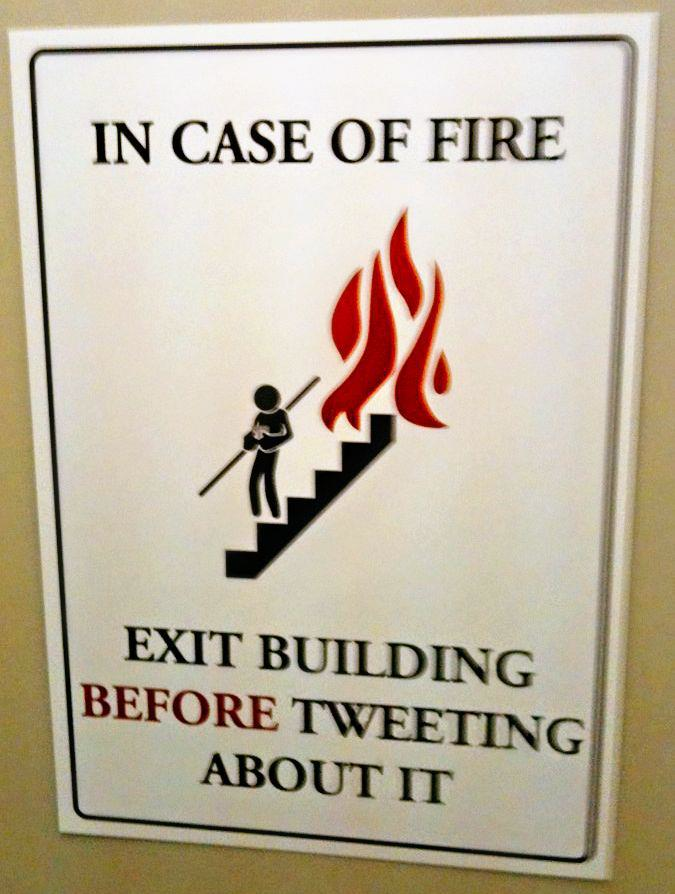
livingLet’s take a closer look at what this means. How is this evident in our daily lives? For an example, think about how social media has exploded with people telling stories to everyone that will listen. Every day, people talk and talk about what is going on around them – sharing the stories with their friends and coworkers. We all love a good story, whether we are telling it or hearing it! The problem, as Cho put it, is that too many are busy telling the good story and not enough people are living a good story!

Look at this picture of an actual sign that reflects this very problem!

I Am Guilty

So, what does this have to do with my problem? I think I have the very problem that Cho described. While I may not have a terminal case of it, I can certainly see symptoms of it in my life. Too often, I enjoy telling the story about what I am doing in trying to integrate my faith into our business. Too often, I like to learn about new ways to run our business according to our Christian faith. Too often, I am in love with the story of a Christian business. The problem is that too often, I am not taking enough action to make it happen!

As a result of this message from Eugene Cho, I am committing to:

    (1) Quit just telling the story
    (2) Quit just loving the story
    (3) Make more effort to be actually living the story!

In my life and in our company, I am going to make more of an effort to address the gaps between ideas and actions! I am going to close these gaps and take more action. I will continue to tell this story on this blog, but I will be making more of an effort to describe actions rather than just ideas. I hope this makes sense to you. If so, I encourage you to do the same.

What are the gaps between your ideas and actions?

Are you comfortable with them?

What are you going to do about it?

(Originally posted 11/02/11)